Which garden waste option should you choose?
The best way to dispose of garden waste depends on how much you have, what it contains and whether you can transport it safely.
- Small amounts of grass, leaves and plant cuttings: compost them at home or use Southend’s garden waste collection.
- A manageable amount and a suitable vehicle: take the waste to a local household recycling centre.
- Waste produced gradually during a larger project: consider hiring a skip.
- Heavy, bulky or mixed garden waste: arrange a licensed garden waste collection.
- An overgrown garden that still needs clearing: use a team that can complete the clearance and remove the waste.
Garden waste is not always as simple as it looks
The gardening itself is not always the difficult part. You cut back the hedge, clear the weeds and trim a few branches. Then you turn around and realise that half the garden is sitting in a pile by the back gate.
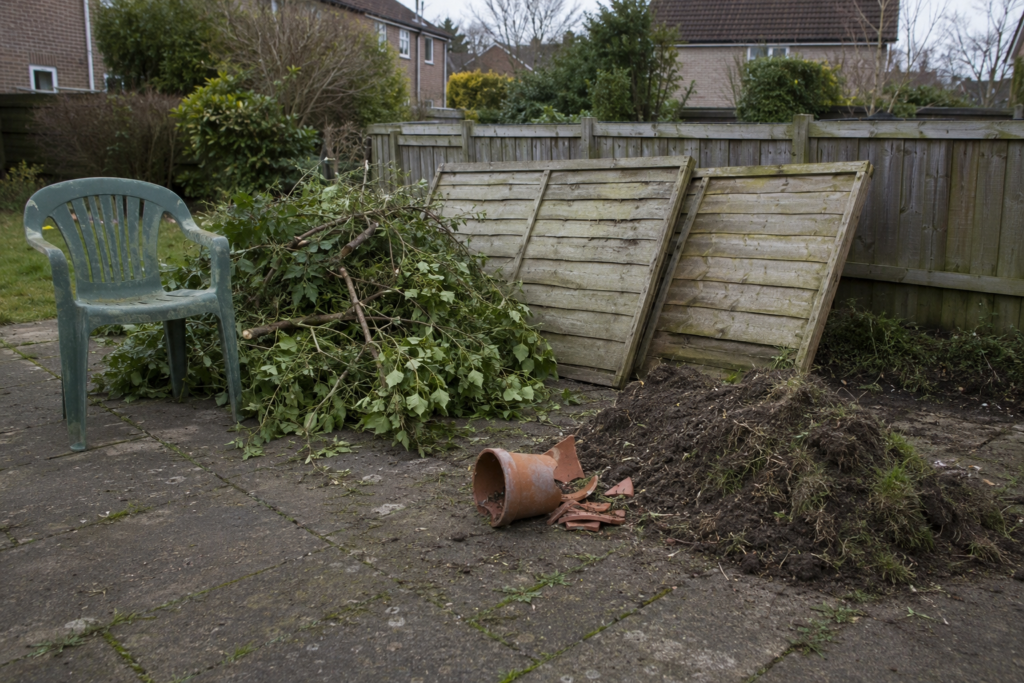
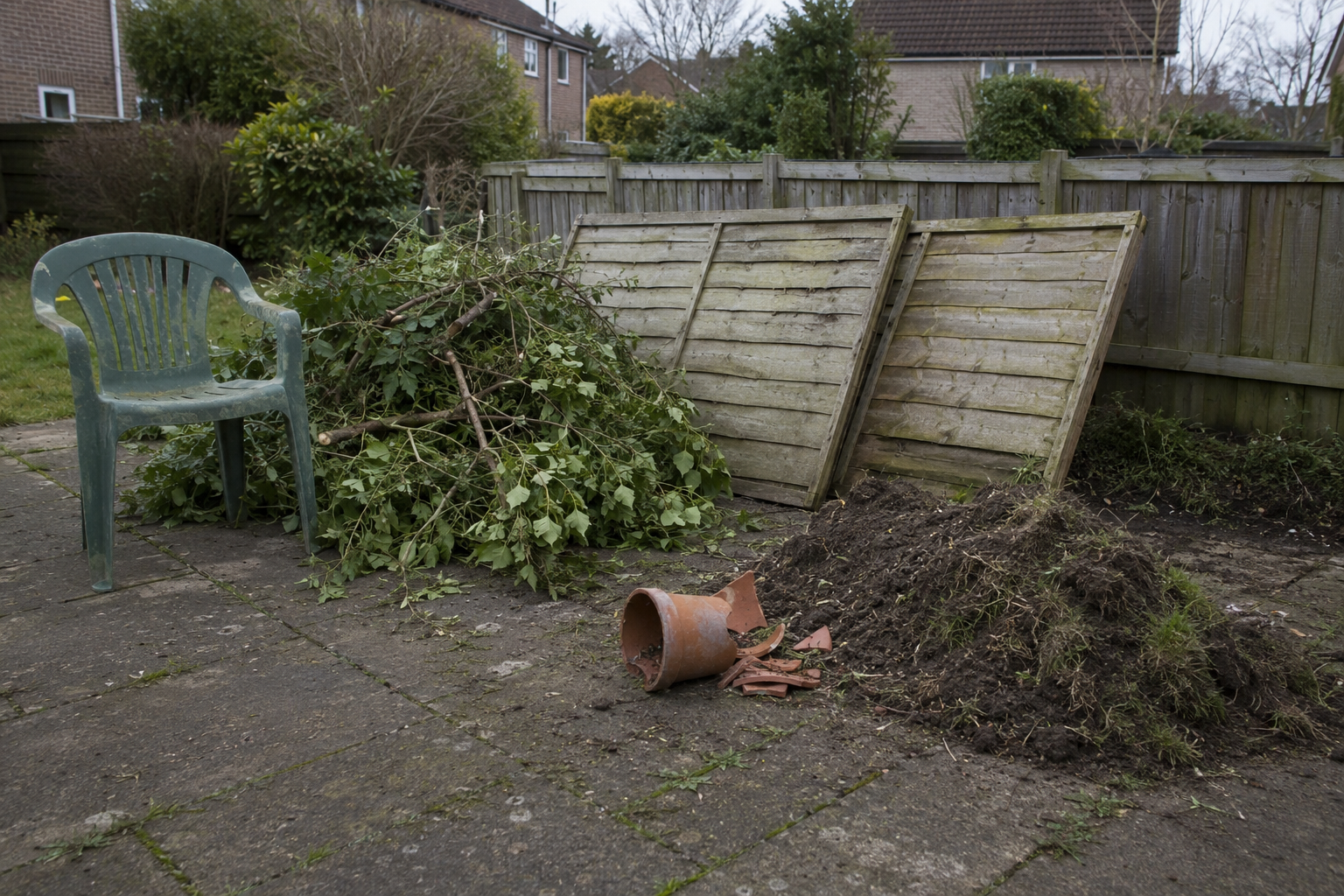
A few grass cuttings are normally easy to manage. An overgrown garden containing branches, soil, broken fencing, old pots and a damaged shed is a different job entirely.
The right disposal option depends on the amount of waste, how heavy it is, whether it contains mixed materials and whether you can transport it safely.
What changed for garden waste in 2026?
England’s Simpler Recycling requirements came into effect on 31 March 2026. These rules require food and garden waste to be kept separate from other recycling streams.
This does not mean every household automatically receives a free garden waste bin. Local authorities can continue to charge for an optional household garden waste collection.
Southend-on-Sea continues to operate a paid garden waste service. At the time this guide was reviewed, the council listed the following charges:
- £68.50 for a 12-month garden waste subscription
- £40 to purchase a new 240-litre garden waste bin
- £11 for ten approved compostable garden waste sacks
Please note: Council prices and collection arrangements can change. Check the official Southend-on-Sea City Council website before registering.
View the current Southend garden waste service information
What can go in a Southend garden waste bin?
Southend’s garden waste collection is designed for ordinary plant material produced through regular garden maintenance.
Accepted garden waste
- Grass cuttings
- Leaves
- Weeds
- Cut flowers
- Tree and shrub prunings
- Rose cuttings
- Small branches
Waste that is not accepted
- Soil and turf containing soil
- Stones
- Bricks and concrete
- Treated wood
- Plastic bags
- Metal or glass
- Food waste
- Animal waste
- Garden ornaments
- Large branches
Small branches are accepted, but the council currently specifies that they should be no longer than approximately 12 inches and no thicker than approximately one inch in diameter.
This is where many homeowners get caught out. A garden clearance often creates several different types of waste. The hedge cuttings might be accepted, while the soil, rubble, fence panels and old garden furniture are not.
1. Compost suitable garden waste at home
Home composting is the lowest-cost option for smaller amounts of biodegradable garden waste.
Suitable materials can include:
- Grass cuttings
- Dry leaves
- Soft plant material
- Small chopped prunings
- Annual weeds that have not gone to seed
Composting is most practical when you have enough outdoor space and are happy to wait for the material to break down.
It is not a quick answer for a garden that needs clearing immediately. Thick branches, diseased plants, invasive weeds and large quantities of wet grass can also be difficult to manage in a domestic compost bin.
2. Use Southend’s council garden waste collection
The council subscription is normally the most convenient option for households that regularly mow lawns, prune shrubs and maintain planted borders.
When it works well
- Regular lawn cuttings
- Leaves and weeds
- Small hedge trimmings
- Routine garden maintenance
- Households without large one-off clearances
Its limitations
- A new bin must be purchased separately
- Additional bins require additional subscriptions
- Soil and rubble are not accepted
- Large branches are not accepted
- Sheds, fencing and furniture are not accepted
- You must fill and move the bin yourself
3. Take the waste to a local recycling centre
Taking garden waste to a household recycling centre can work when the load is manageable and you have a suitable vehicle.
Stock Road Recycling Centre
Stock Road
Southend-on-Sea
SS2 5QF
Leigh Marshes Recycling Centre
Leigh Marshes
Leigh-on-Sea
SS9 2ET
A recycling centre may be suitable when:
- You have a car or suitable vehicle
- The waste is safe and light enough to lift
- You can protect the vehicle interior
- You are comfortable loading and unloading it yourself
- The site accepts the material you are transporting
Remember to consider the entire job rather than just the drive. Branches may need cutting down, loose material needs containing and wet soil can become extremely heavy.
Always check current opening hours, vehicle restrictions and site rules before travelling.
Check Southend recycling centre information
4. Hire a skip
A skip may be appropriate for a larger garden renovation where waste will be produced gradually over several days.
It gives you somewhere to place the waste while you work, but you will normally need to:
- Load everything yourself
- Separate prohibited materials
- Estimate the correct skip size
- Make room for delivery and collection
- Prevent other people from adding their waste
- Keep the load within the permitted level
If a skip is placed entirely on private land, a highway permit is generally not required. If it needs to be positioned on a public road, the skip operator must arrange the appropriate permission.
For a quick clearance where the waste is already in a pile, a collection service may be simpler because the team loads the waste and takes it away during the same visit.
5. Book a licensed garden waste collection
A professional collection is normally the most practical option when the waste is too heavy, bulky or mixed for the council service.
A collection may be suitable when the waste is:
- Too large for the council garden waste bin
- Too heavy to move safely
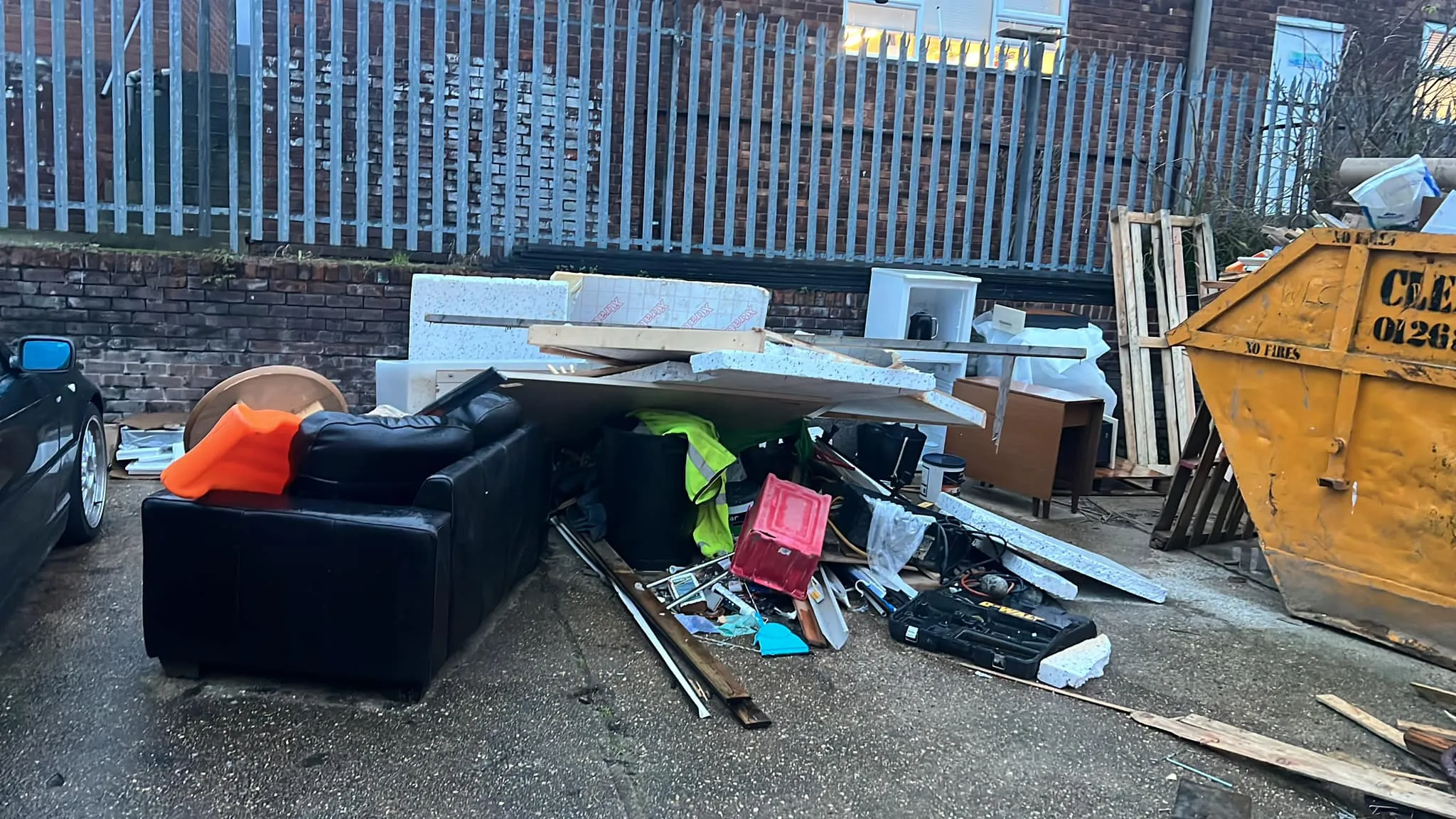
- Mixed with soil, rubble or timber
- Located at the bottom of the garden
- Left behind after hedge or tree work
- Accompanied by an old shed or garden furniture
- Needed out of the way quickly
- Difficult to transport without damaging your vehicle
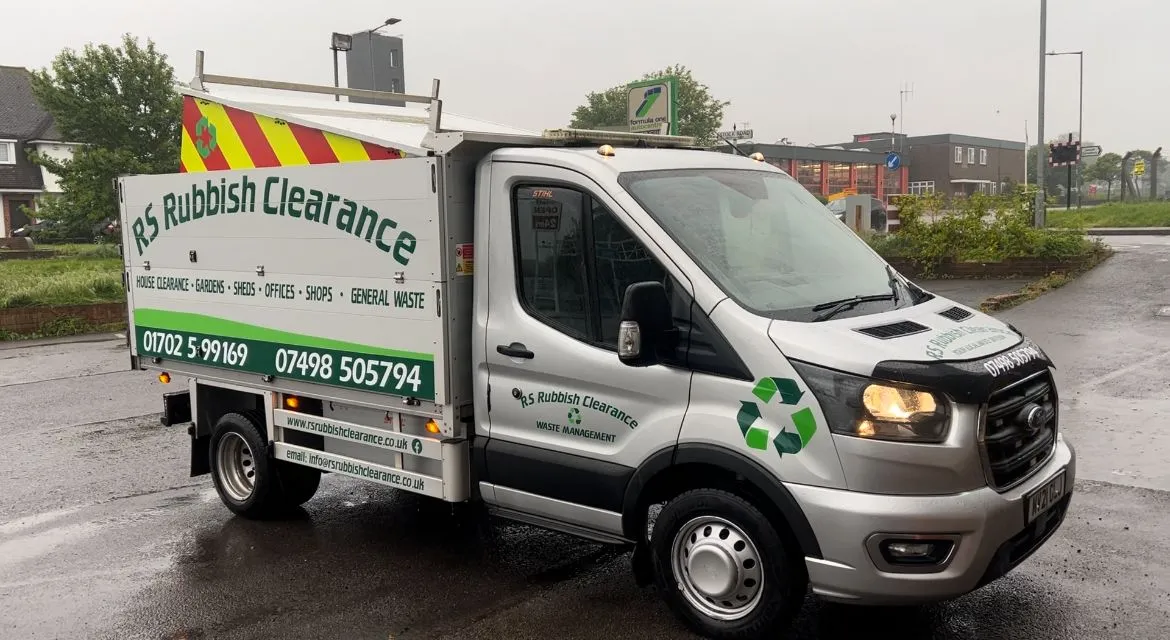
RS Rubbish Clearance provides
garden waste removal in Southend-on-Sea
and surrounding areas.
Collections can include ordinary green waste alongside soil, rubble, branches, hedge cuttings, garden tools, furniture and shed contents. This allows one team to deal with several waste types during the same clearance.
Garden waste collection or full garden clearance?
These services are often confused, but they are not always the same.
Garden waste collection
This normally means the gardening work has already been completed. The waste is waiting in a pile, bags or an accessible area and only needs collecting.
- Bagged grass cuttings
- Hedge trimmings
- Cut branches
- Fallen leaves
- Removed shrubs
- Logs and untreated timber
Full garden clearance
A full clearance may involve cutting, dismantling or moving items before the resulting waste can be removed.
- Cutting back an overgrown garden
- Removing thick weeds or brambles
- Clearing unwanted shrubs
- Emptying or dismantling a shed
- Removing broken garden furniture
- Clearing old fence panels
- Removing soil or landscaping materials
Be clear about which service you need when requesting a quote. Photographs are especially useful because “a pile of garden waste” can mean anything from six light bags to several tonnes of soil and timber.
How is garden waste removal priced?
A responsible waste removal company will usually consider more than the number of bags.
Volume
How much space will the waste occupy once it has been loaded into the vehicle?
Weight
Soil, turf, rubble, wet timber and large tree sections can quickly increase the weight of a collection.
Waste type
Clean green waste may be handled differently from mixed loads containing furniture, concrete or treated timber.
Access
Waste next to a driveway is quicker to collect than material carried through a house, down steps or from the end of a narrow garden.
Labour
Waste that is already cut and accessible takes less time than material requiring digging, dismantling or cutting.
What to send when requesting a quote
- Several clear photographs of the waste
- Your postcode
- A description of the materials
- Details of side or rear access
- Information about steps or restricted parking
- Whether anything needs cutting or dismantling
Why checking the waste carrier matters
Your responsibility does not necessarily end when somebody drives away with your rubbish.
Householders have a duty of care to take reasonable steps to ensure their waste is given to an authorised person or business. If rubbish is illegally dumped and traced back to your property, you may be asked to show who collected it.
Before accepting a quote, ask:
- Are you registered as a waste carrier?
- What is your waste carrier registration number?
- Where will the waste be taken?
- Will I receive confirmation or a receipt?
- Are there materials you are not authorised to collect?
RS Rubbish Clearance waste carrier registration:
CBDU420510
How to prepare for a garden waste collection
Separate heavy materials
Keep soil, rubble, concrete and stones separate from lightweight branches and leaves where possible.
Do not hide other waste
Do not cover rubble, paint tins or general rubbish beneath green cuttings. The collector needs to understand what is being removed.
Create a clear access route
Move toys, pots and outdoor furniture away from the route between the waste and the collection vehicle.
Take useful photographs
Include one wide photograph showing the entire pile and closer images showing the different materials.
Mention unusual materials
Chemicals, asbestos, gas bottles and some electrical items require specialist handling and should be mentioned before the visit.
Which garden waste option is best for you?
| Your situation | Best starting point |
|---|---|
| Regular grass and hedge cuttings | Southend council subscription |
| Small amounts of suitable plant material | Home composting |
| Manageable load and a suitable vehicle | Household recycling centre |
| Waste produced throughout a landscaping project | Skip hire |
| Heavy soil, rubble or timber | Licensed waste collection |
| Mixed garden rubbish | Licensed waste collection |
| Shed, furniture and green waste together | Full garden clearance |
| Waste requiring cutting or dismantling | Garden clearance team |
There is no single correct answer for every garden. The council service is economical for regular maintenance. Recycling centres work when you can transport the material yourself. Skips suit longer projects. A licensed collection is normally more convenient when the waste is bulky, heavy, mixed or difficult to access.
Garden waste disposal questions
Can soil go in a Southend garden waste bin?
No. Southend Council lists soil and stones among the materials that cannot be placed in its garden waste collection. Soil should be taken to an appropriate facility or removed by a licensed waste carrier.
Can branches go in the garden waste bin?
Small branches are accepted, but Southend Council currently states that they should be no longer than approximately 12 inches and no thicker than approximately one inch in diameter.
Can garden waste be taken to the Southend tip?
Suitable household garden waste can be taken to Southend’s household recycling centres. Check the current site rules, opening hours and vehicle restrictions before travelling.
Is collection cheaper than hiring a skip?
It depends on the amount, weight and type of waste. A collection can offer better value when the waste is already prepared because loading and transport are included. A skip may work better when waste will be produced gradually over several days.
Do garden waste removal companies need a licence?
Businesses transporting waste should hold the appropriate Environment Agency waste carrier registration. Householders should check this before allowing somebody to remove their waste.
Can garden furniture go in the council garden waste bin?
No. Garden furniture and other non-organic materials cannot be placed in the council garden waste collection. They should be taken to an appropriate recycling facility or collected separately.